Our History
SWR-TX-051: Plano Mustangs Composite Squadron
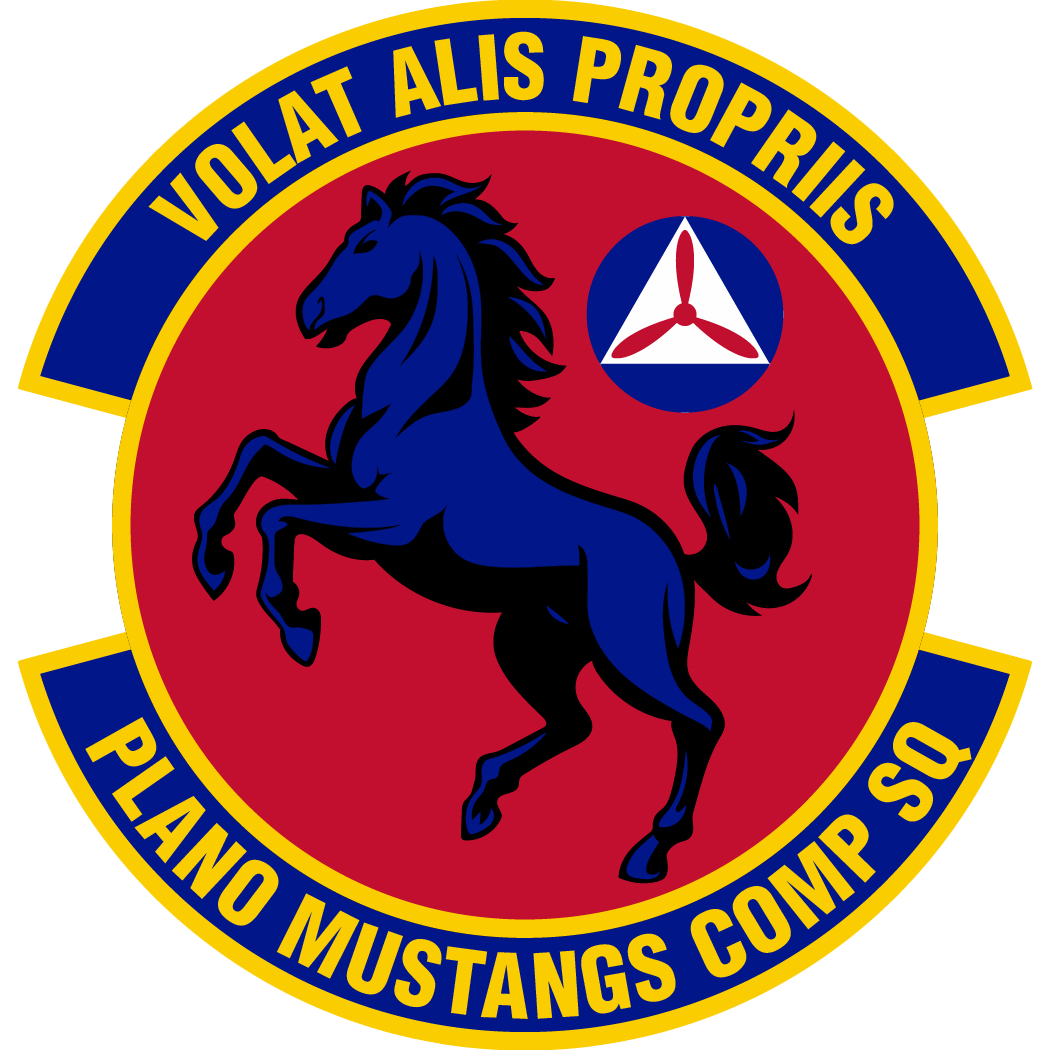
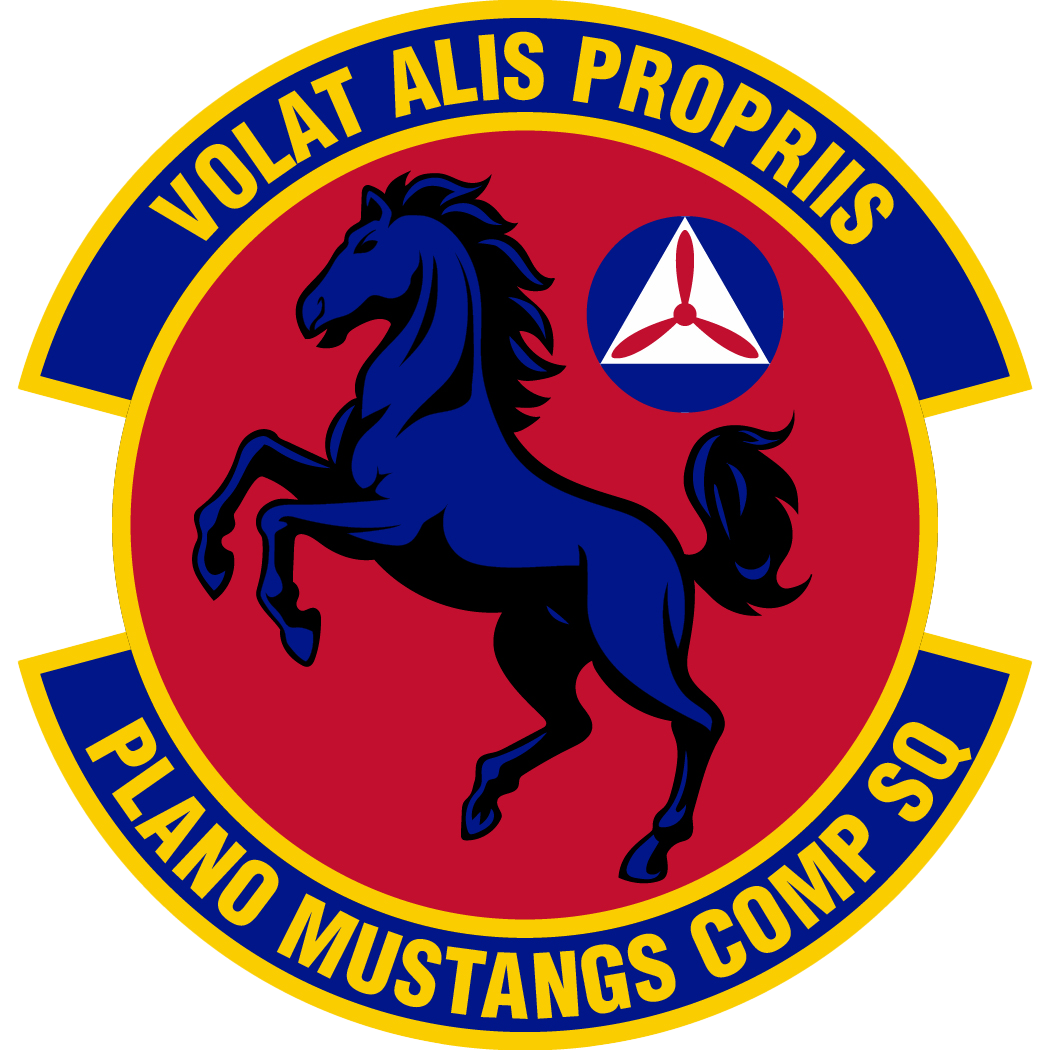
The Plano Mustangs Composite Squadron was officially chartered on November 7, 1996, under the original charter number 42051, prior to the adoption of the standardized region-wing-squadron designation now seen as SWR-TX-051. Since day one, the squadron has been graciously supported by the American Legion Harding-Blaine Post 321 in Plano, Texas. Their enduring generosity has allowed us to carry out operations, grow our membership, and serve our community with excellence . About our current patch design:Created by the TX-051 Commander, 1st Lt Eric Jakimier, in 2026 to modernize with current standards, the patch was approved that year under Group II Commander Lt Col Linc A. Grubaugh and Texas Wing Commander Col Donald A. Gulliksen. Each element of the patch carries meaning:
About our historical patch design:
The squadron patch is a proud symbol of our identity and values, created through a collaborative effort by squadron members before May 2001. It was officially approved by Texas Wing Commander Colonel Tom Todd in May of that year. Each element of the patch carries meaning:
List of honored members:Cadet Programs:Cadet Programs have always been central to our mission, offering dynamic leadership development for youth. Among the highest honors a cadet can earn is the General Carl A. Spaatz Award, a milestone achieved by fewer than 0.5% of all Civil Air Patrol cadets. Each award is individually numbered and reflects extraordinary commitment and excellence. We are proud to honor the following Spaatz Cadets from our squadron:
Adult Members:Our success as a volunteer organization depends on the dedication of our adult members, many of whom balance CAP service with careers, families, and personal challenges. We honor those who have shown long-standing commitment and leadership:
What is the P-51 Mustang?At the heart of our squadron’s identity lies a legendary aircraft — the P-51 Mustang — a name that embodies courage, innovation, and perseverance. More than just a fighter plane, the Mustang symbolizes a turning point in the history of aerial warfare and stands as a tribute to American ingenuity and Allied resolve during World War II. A Fighter Born From Urgency and InnovationThe Mustang was conceived in 1940 under immense pressure. The British needed fighters fast and turned to North American Aviation, who promised to design an entirely new aircraft rather than produce outdated models. In just 102 days, the prototype NA-73X was rolled out — a feat nearly unheard of in aircraft development. Initially fitted with the Allison V-1710 engine, the early Mustangs performed admirably at low altitudes but struggled higher up. The breakthrough came when engineers paired the Mustang with the Rolls-Royce Merlin engine, transforming it into a high-altitude champion. The upgraded P-51B/C and ultimately the P-51D model could now escort bombers deep into enemy territory, drastically shifting the balance of air superiority. Dominating the Skies of Europe and BeyondWith unmatched speed, range, and firepower, the Mustang became the guardian angel of the skies, escorting American B-17 and B-24 bombers over Germany and providing close air support to ground forces in every major theater — from the rolling fields of France to the jungles of the Pacific. Mustang pilots were fearless, tenacious, and highly effective. By war’s end, they had claimed over 4,950 enemy aircraft, crippling the Luftwaffe and paving the way for Allied victory. The Mustang didn’t just win dogfights — it won battles. A Legacy That EnduresAfter World War II, the Mustang continued to serve with distinction in the Korean War, now redesignated as the F-51. Though jets had entered the scene, the Mustang proved invaluable as a fighter-bomber, flying missions over rugged terrain and harsh conditions where versatility and endurance mattered most. Even decades later, the P-51's story wasn’t over. It became a favorite among civilians, collectors, and racers, and many lovingly restored Mustangs still take to the skies today — a living monument to its glory. A Symbol of Who We AreOur squadron proudly carries the Mustang name not just for its iconic status, but because it represents everything we strive for — excellence under pressure, vigilance in service, and an unbreakable spirit. Just like the aircraft, we aim to be agile, bold, and reliable — whether we’re mentoring cadets, responding to missions, or serving our community. The Plano Mustangs honor the legacy of the P-51 not only in name, but in mission — soaring ever forward with purpose and pride. |